 Labreador
Fish 3D model: interactive rainbow trout anatomy
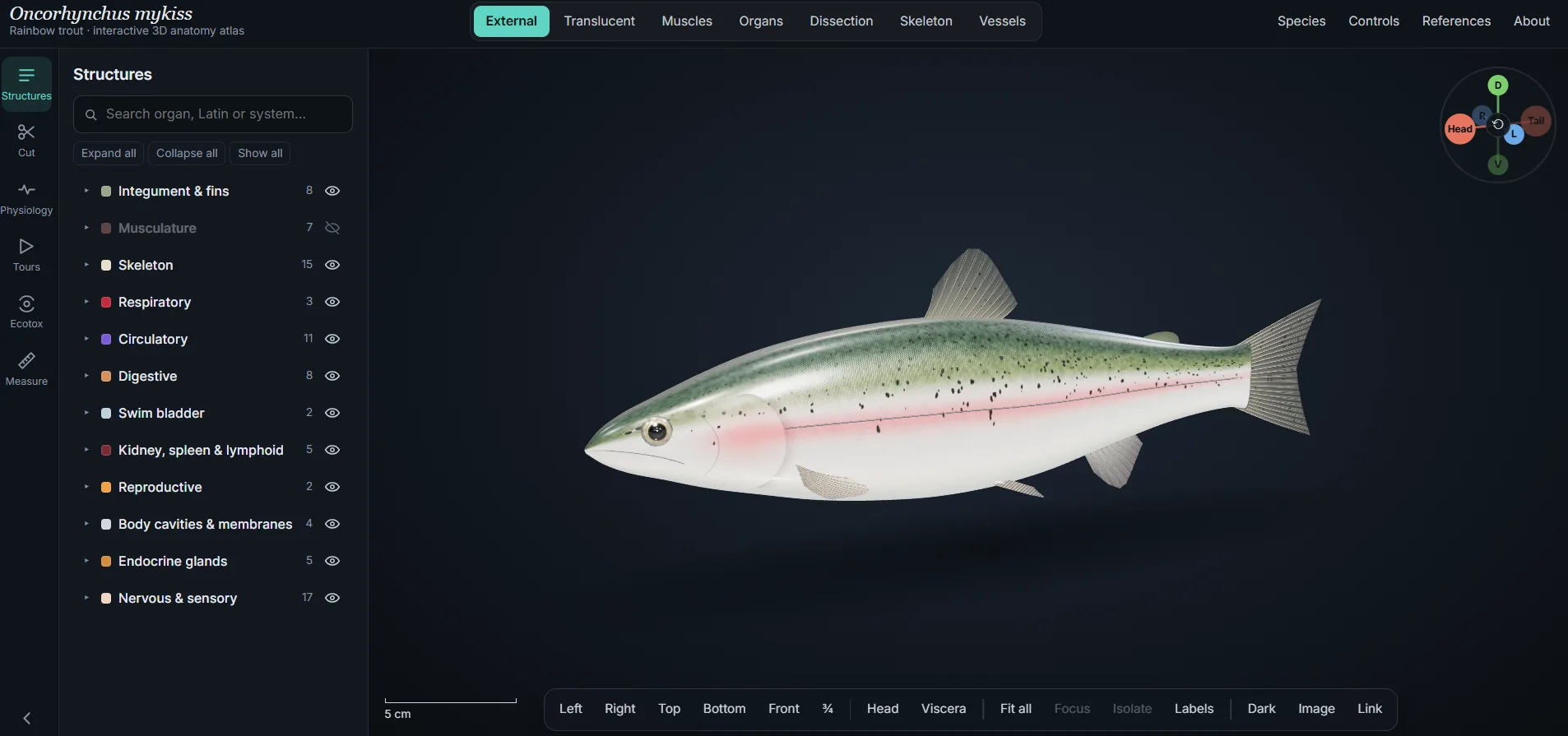
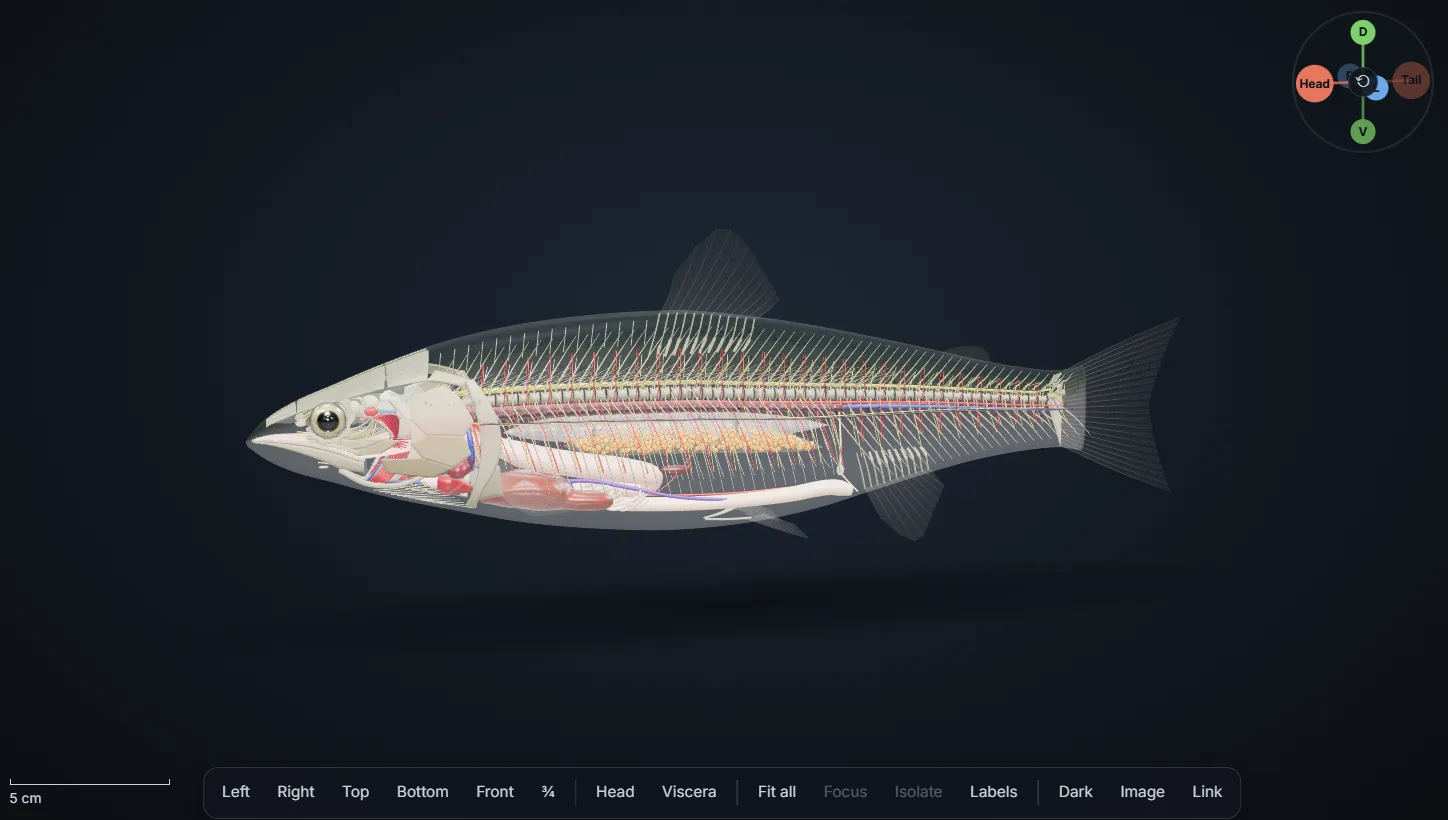
An interactive 3D anatomy model of the rainbow trout (Oncorhynchus mykiss) for teaching and learning fish anatomy. Rotate, cut and dissect the fish in your browser and switch between external view, translucent skin, muscles, organs, dissection, skeleton and vessels. Free, no installation, requires a WebGL2 browser.
What the fish anatomy model shows
- Integument & fins – skin, scales, lateral line and all fins
- Musculature – axial (myomere) and head muscles
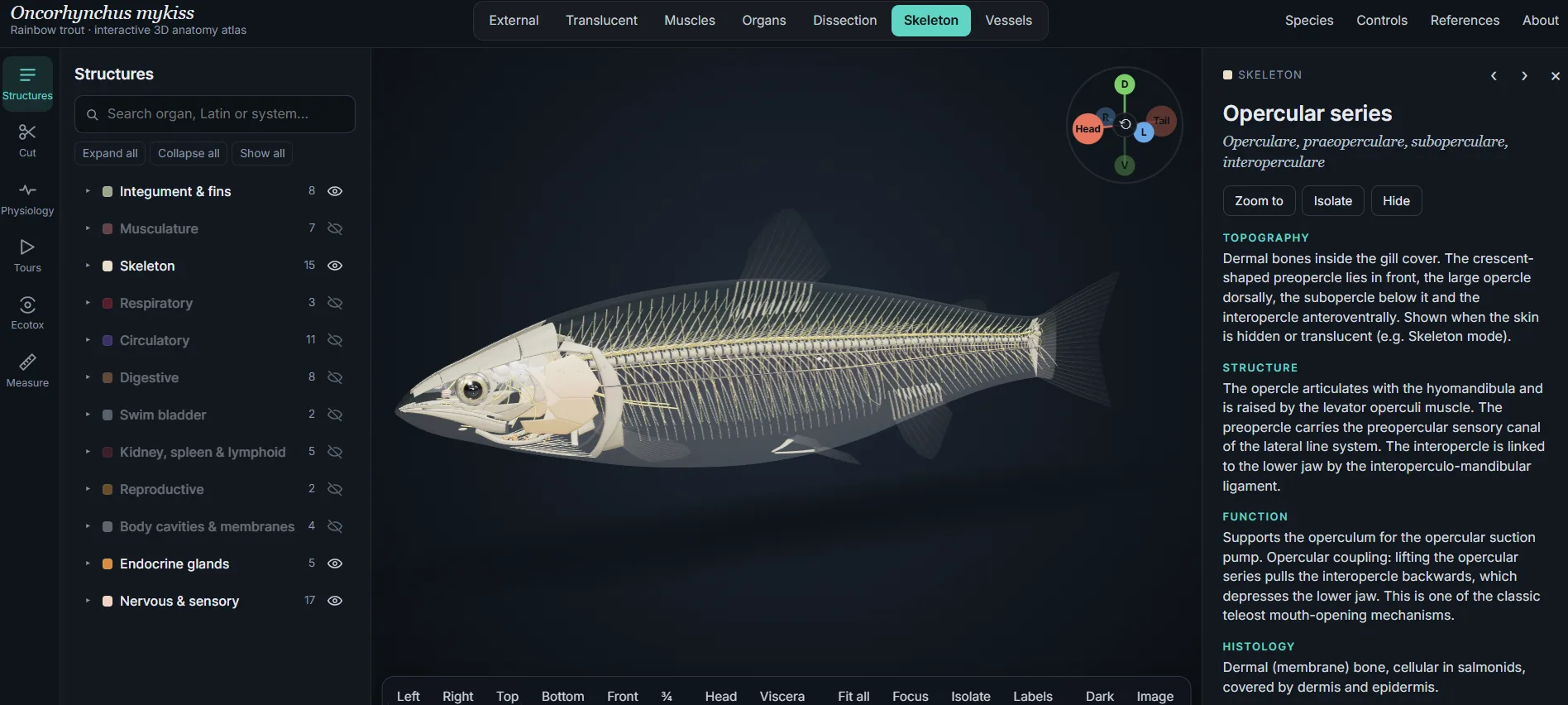
- Skeleton – skull, opercular series, vertebral column, ribs and fin rays
- Respiratory – gills and gill arches
- Circulatory – heart, major arteries and veins
- Digestive – stomach, pyloric caeca, intestine and liver
- Swim bladder – swim bladder and its connection to the gut
- Kidney, spleen & lymphoid – head and trunk kidney, spleen
- Reproductive – gonads
- Endocrine glands – major endocrine organs
- Nervous & sensory – brain, spinal cord, nerves, eye and sensory organs
Each structure has its Latin name and notes on topography, structure, function and histology. You can search structures, isolate or hide them, cut through the body, measure and follow guided tours.
Who it is for
Students and teachers of zoology, ichthyology, veterinary medicine and aquaculture, and researchers who need to locate tissues before sampling. For example liver, gonads and muscle are sampled for HSI and GSI biometric indices and for metal bioaccumulation. The model is a teaching aid and is not part of the calculation modules.